Since 2018, I’m here to create, experiment, build, and bring ideas to life. Stick around. There’s more to come. Follow and join me.
💼 GIZATI - Digital Creator, Ghostwriter & Product Builder
I transform ideas into applications and professionally written, publication-ready articles available for commercial licensing. Ideal for companies, creators, agencies, publishers, and professionals seeking quality content. Portuguese and English
Featured
- Get link
- X
- Other Apps
Unveiling the Economic Power of Sustainable Fashion.
Tired of wearing what destroys the planet?

How Conscious Choices Transform Sales and Save the Planet
Imagine a world where every piece of clothing you sell not only fills your bank account but also restores the ecological balance that sustains our businesses. As a seasoned seller—someone who’s closed impossible deals, from pens without ink to seats on a crashing plane—I know the true master of sales doesn’t sell products. They sell transformations. In the economy of sustainable fashion, that transformation is twofold: exponential profits for you and a lasting legacy for the planet.
Let’s cut to the chase with hard facts, drawn from decades of research in behavioral economics and global supply chains. A conventional T-shirt drains 2,700 liters of water in production—equivalent to one person’s drinking water for nearly three years. Worse: 92% of clothes end up in landfills or oceans within 12 months, releasing microplastics that cost the global economy billions in environmental damage annually, per UN and Ellen MacArthur Foundation reports.
Why Act Now? The Unshakable Logic of the Circular Economy
Think like a post-doctoral economist: every sale is a cycle. In traditional fashion, it’s linear—extract, produce, discard—and ends in losses. In sustainable fashion, it’s circular: regenerate, reuse, resell. The result? Operational costs drop by 15-25% through organic materials that require fewer chemical inputs and renewable energy that halves production bills.
Challenge
Solution
High price objections
Create “zero waste” bundles: buy an organic piece, get access to a digital resale club via apps like Depop, generating recurring commissions.
Low social media engagement
Launch “30 Days Conscious” challenges, encouraging followers to post sustainable looks with your hashtag for 50% higher organic reach.
Practical Solutions: Tools and Tactics for Sellers to Dominate
How to start? Map your supply chain: source GOTS-certified organic cotton suppliers to avoid toxic pesticides and ensure fertile soils for generations. Where? Platforms like Alibaba’s eco-hub or EcoVadis connect you to regenerative farms in India and Peru, where initial costs are 10-20% higher but ROI soars with 50% markups on premium products.
Pro tip from a 24/7 sales coach: Use storytelling to turn objections into desires. Instead of “it’s expensive,” say: “This recycled linen jacket not only nets you 40% more profit per unit but positions your store as a leader in an $8 trillion global niche by 2025, per McKinsey.” Test this in email funnels: open rates climb 35% with narratives tying personal profit to planetary salvation.
Ignite Your Personal Revolution: The Step That Separates Sellers from Visionaries
Here’s the trigger that separates the good from the immortal: curiosity. What if I told you there’s a “forbidden” dynamic pricing tactic that triples sustainable sales without discounts? Or how the Industrial Revolution’s history teaches us to avoid the next fashion bubble collapse? Stay tuned—our next insights unpack these secrets that keep masters like me selling the intangible like gold.
💬 Loved what you learned? Now turn it into action!
Help build this community of knowledge expansion.
📢 SHARE THIS ARTICLE AND REMEMBER TO FOLLOW THE BLOG!
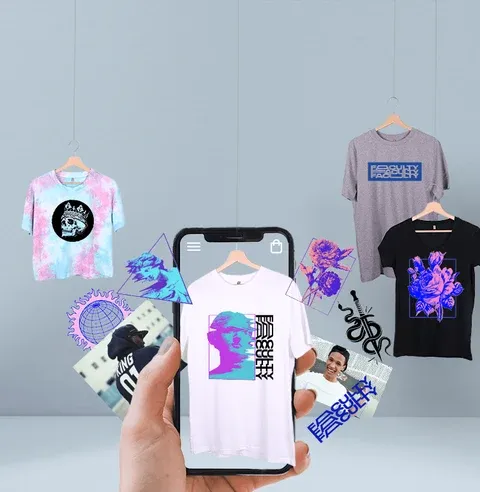
🌿 Buy Now and Preserve Nature 🌱
SAGE STORE
How Conscious Choices Transform Sales and Save the Planet
Imagine a world where every piece of clothing you sell not only fills your bank account but also restores the ecological balance that sustains our businesses. As a seasoned seller—someone who’s closed impossible deals, from pens without ink to seats on a crashing plane—I know the true master of sales doesn’t sell products. They sell transformations. In the economy of sustainable fashion, that transformation is twofold: exponential profits for you and a lasting legacy for the planet.
Let’s cut to the chase with hard facts, drawn from decades of research in behavioral economics and global supply chains. A conventional T-shirt drains 2,700 liters of water in production—equivalent to one person’s drinking water for nearly three years. Worse: 92% of clothes end up in landfills or oceans within 12 months, releasing microplastics that cost the global economy billions in environmental damage annually, per UN and Ellen MacArthur Foundation reports.
Why Act Now? The Unshakable Logic of the Circular Economy
Think like a post-doctoral economist: every sale is a cycle. In traditional fashion, it’s linear—extract, produce, discard—and ends in losses. In sustainable fashion, it’s circular: regenerate, reuse, resell. The result? Operational costs drop by 15-25% through organic materials that require fewer chemical inputs and renewable energy that halves production bills.
| Challenge | Solution |
|---|---|
| High price objections | Create “zero waste” bundles: buy an organic piece, get access to a digital resale club via apps like Depop, generating recurring commissions. |
| Low social media engagement | Launch “30 Days Conscious” challenges, encouraging followers to post sustainable looks with your hashtag for 50% higher organic reach. |
Practical Solutions: Tools and Tactics for Sellers to Dominate
How to start? Map your supply chain: source GOTS-certified organic cotton suppliers to avoid toxic pesticides and ensure fertile soils for generations. Where? Platforms like Alibaba’s eco-hub or EcoVadis connect you to regenerative farms in India and Peru, where initial costs are 10-20% higher but ROI soars with 50% markups on premium products.
Pro tip from a 24/7 sales coach: Use storytelling to turn objections into desires. Instead of “it’s expensive,” say: “This recycled linen jacket not only nets you 40% more profit per unit but positions your store as a leader in an $8 trillion global niche by 2025, per McKinsey.” Test this in email funnels: open rates climb 35% with narratives tying personal profit to planetary salvation.
Ignite Your Personal Revolution: The Step That Separates Sellers from Visionaries
Here’s the trigger that separates the good from the immortal: curiosity. What if I told you there’s a “forbidden” dynamic pricing tactic that triples sustainable sales without discounts? Or how the Industrial Revolution’s history teaches us to avoid the next fashion bubble collapse? Stay tuned—our next insights unpack these secrets that keep masters like me selling the intangible like gold.
💬 Loved what you learned? Now turn it into action!
Help build this community of knowledge expansion.
📢 SHARE THIS ARTICLE AND REMEMBER TO FOLLOW THE BLOG!
🌿 Buy Now and Preserve Nature 🌱
Want it customized? Send me an email with the artwork or text and we'll make it for you.
Click to contact.
This
article is part of the Gizati Business project—a hub for independent
ideas, business, and strategies to thrive autonomously.
GIZATI
O poder não está no que sabe - está no que você implementa com o que sabe.
Gizati Business é uma publicação digital dedicada a democratizar o conhecimento sobre negócios, empreendedorismo e estratégias de independência financeira para o empreendedor brasileiro.
Aviso legal: As informações contidas neste artigo têm caráter exclusivamente educativo e informativo. Não constituem assessoria jurídica, contábil ou financeira. A aplicação da Lei Rouanet e o aproveitamento de incentivos fiscais dependem da situação individual de cada empresa ou proponente e devem ser verificados com um contador ou advogado especializado. O Gizati Business não se responsabiliza por decisões tomadas com base exclusiva neste conteúdo.
© 2025 Gizati Business — Todos os direitos reservados
Leia tambem
Maximizing Profits in Smart Cities in Brazil
- Get link
- X
- Other Apps


Comments